What Is Net Metering?
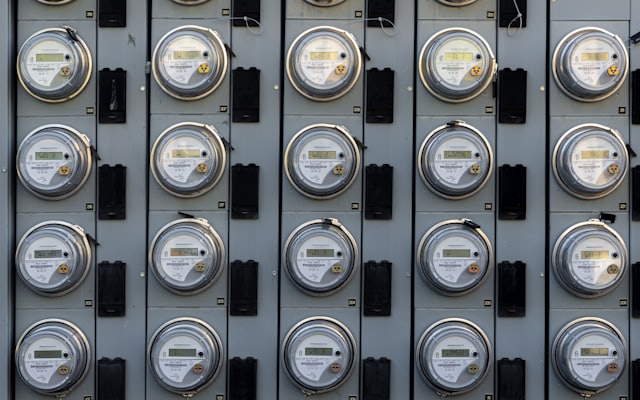
When your solar panels produce more electricity than your home is using at any given moment, that excess power flows back through your meter onto the grid. A bidirectional (net) meter tracks both directions of flow. At the end of your billing period, you pay only the "net" difference between what you consumed and what you exported.
The key question — and the one that varies enormously by state — is: at what rate does your utility credit you for those exports? If they credit you at the full retail rate (say 28¢/kWh) and you also pay 28¢/kWh when you draw from the grid, then the grid is effectively a free storage system. If they only credit you 5¢/kWh for exports, your solar production during the day is worth far less, fundamentally changing your ROI math.
Net metering programs are regulated at the state level (and sometimes at the utility level). This is why net metering varies so dramatically — Massachusetts and New Jersey offer among the best programs in the world, while Alabama and Tennessee offer almost nothing.
Full Retail Credit States (1:1 Net Metering)
These states require utilities to credit solar exports at the full retail electricity rate. This is the gold standard for solar economics.
New Jersey~20¢/kWh credit + SREC program. Among the best solar policies in the US.
Massachusetts~31.5¢/kWh retail credit. SMART program provides additional incentives beyond net metering.
Maryland~16¢/kWh credit. Strong net metering with rolling annual credits — no expiration.
Vermont~22¢/kWh. Small state, but excellent solar policy. Green Mountain Power leads nationally on battery incentives too.
New York~22¢/kWh credit. NY-Sun program adds cash incentives on top of net metering value.
Illinois~16¢/kWh. Illinois Shines SREC program adds $50–70/yr per kW installed.
Colorado~15¢/kWh. Strong program, though Xcel Energy has lobbied for changes. Watch for 2027 updates.
Nevada~15¢/kWh after 2017 policy reversal restored net metering. NV Energy territory.
Oregon~13¢/kWh. PGE and Pacific Power territories both offer solid net metering.
Washington~12¢/kWh. Low rates reflect cheap hydropower, but net metering policy is fair and stable.
Wisconsin~17¢/kWh. We Energies and Madison Gas & Electric offer reasonable programs.
Reduced Credit States: The Partial Net Metering Problem
Several major states have moved away from full retail credit, significantly reducing solar ROI for new customers.
California — NEM 3.0 (The Biggest Change in US Solar History)
Effective April 15, 2023 for new solar installations, California's NEM 3.0 program replaced the previous retail-rate credits with "Avoided Cost Calculator" (ACC) rates. In practice, this means:
- Daytime exports (10am–3pm) earn roughly 4–8¢/kWh — down from ~25–30¢/kWh
- Evening exports (4–9pm) earn slightly more: ~10–15¢/kWh, because the grid needs power then
- Average export credit: approximately 5¢/kWh vs. 28¢/kWh retail rate customers pay
- Net result: solar-only payback stretched from ~7 years to ~12–15 years for typical CA home
- Battery storage is now essentially mandatory for new CA solar to maintain pre-NEM 3.0 economics — self-consuming your solar avoids the low export rate entirely
- Customers who installed before April 15, 2023 are grandfathered under NEM 2.0 for 20 years from their installation date
Arizona — 85% of Retail
Arizona utilities credit solar exports at approximately 85% of the retail rate. At 16¢/kWh retail, exports earn ~13.5¢/kWh. This is reasonable but not the full 1:1 credit of the best states.
Hawaii — Highly Restricted
Hawaii has essentially ended traditional net metering for new customers. Most new solar is installed under a "Customer Self-Supply" tariff with no export credit at all — you size your system to cover only what you use on-site. Grid export is not compensated.
States With No Meaningful Net Metering
These states either have no statewide net metering mandate or have programs so limited they provide minimal benefit to most solar homeowners.
- Tennessee (TVA territory): The Tennessee Valley Authority sets rates for most of the state. TVA's Generation Partners program pays only 3¢/kWh for solar exports — far below retail rates of 12¢/kWh. Solar payback in Tennessee is typically 18–22+ years.
- Alabama (Alabama Power / TVA): No statewide net metering mandate. Alabama Power offers a very limited "Distributed Generation" rate that effectively pays avoided cost (~4–5¢/kWh) for exports. Combined with low retail rates (~13¢/kWh), solar ROI is among the worst in the nation.
- Mississippi: Mississippi Power and Entergy Mississippi offer limited programs. Payback periods of 20+ years are common in Mississippi due to low electricity rates and minimal net metering value.
- Louisiana: One of the lowest electricity rates in the nation (11–13¢/kWh) plus limited net metering makes solar ROI very poor. The low electricity cost that makes Louisiana living affordable is actually a barrier to solar adoption.
How to Calculate Your Net Metering Value
Once you know your state's export credit rate, calculating your annual net metering value is straightforward:
Annual solar production (8kW system in NJ)9,600 kWh
On-site consumption (typically 70–80% of production)7,200 kWh
Exported to grid2,400 kWh
NJ retail rate (credit rate)20¢/kWh
Annual net metering credit value$480/yr
Value of on-site consumption avoided$1,440/yr
Total annual solar value (NJ)$1,920/yr
Now run the same numbers for California under NEM 3.0: 2,400 kWh exported × 5¢/kWh = only $120 in net metering credits (vs. $480 in NJ). The on-site consumption value stays the same, but the export value collapses. This is why California solar customers need to either oversize consumption or add battery storage.
Virtual Net Metering: The Option for Non-Solar-Roof Homes
Virtual net metering (VNM), also called community solar, allows homeowners and renters without suitable roofs to subscribe to a share of an off-site solar farm. Your subscription generates solar power, and you receive bill credits equivalent to that production — typically at the retail rate, in states that mandate it.
Community solar is currently available with strong programs in: New York, Illinois, Massachusetts, Maryland, Colorado, Minnesota, New Jersey, Connecticut, and Oregon. Savings are typically 5–15% on your electricity bill. No installation, no maintenance, and you can transfer your subscription when you move.
Top 10 States for Net Metering Value (2026)
- Massachusetts — 31.5¢/kWh + SMART program
- Hawaii — High rates (42¢/kWh) but limited export
- Connecticut — 28¢/kWh retail credit
- California — Pre-NEM 3.0 customers only
- New Jersey — 20¢/kWh + SREC adds $500–1,000/yr
- New York — 22¢/kWh + NY-Sun incentives
- Vermont — 22¢/kWh, stable policy
- Rhode Island — 24¢/kWh, small but strong program
- Maryland — 16¢/kWh, rolling credits, SREC market
- Illinois — 16¢/kWh + Illinois Shines SREC
Policy Note: Net metering policies change. California's NEM 3.0 happened after years of advocacy from utilities. New Jersey, Massachusetts, and New York utilities have made similar filings. If you're considering solar, installing sooner rather than later locks in current rates — many states grandfather existing customers under the rules at the time of installation for 10–20 years.
Frequently Asked Questions
What is net metering and how does it work?
Net metering is a billing arrangement where your utility installs a bidirectional meter that tracks both the electricity you draw from the grid and the excess solar electricity you send to the grid. At the end of each billing cycle, you pay only the "net" difference. If you exported more than you imported in a given month, you receive a credit rolled to future bills.
How much did California NEM 3.0 reduce solar savings?
Under California NEM 3.0 (effective for new installations from April 2023), solar export credits dropped from about 25–30 cents per kWh to roughly 4–8 cents per kWh — a reduction of 70–80%. This dramatically extended solar-only payback periods from roughly 7 years to 12–15 years and made battery storage essentially mandatory for optimal economics on new California solar installations.
What is virtual net metering?
Virtual net metering (VNM) allows multiple utility customers to share credits from a single off-site solar installation — called a community solar farm. Subscribers receive bill credits proportional to their share of the farm's production. You don't need to own a suitable roof or install anything. Community solar is available in NY, IL, MA, MD, CO, MN, NJ, OR, CT, and several other states.
Can utilities eliminate net metering?
Yes — utilities regularly petition state regulators to reduce or restructure net metering programs. California's NEM 3.0 is the most prominent example. However, customers who install solar before policy changes are often grandfathered under the old rates for 10–20 years. States with strong solar advocacy organizations (NJ, MA, NY) have historically better-protected programs.