How Much Energy Does Your EV Actually Use?
Before sizing a solar system, you need to know your EV's energy consumption. Efficiency is measured in kWh per mile — lower is better. Here are the real-world averages for popular 2026 models at typical highway and mixed driving speeds:
Tesla Model 3 (Standard/Long Range)
- Efficiency: 0.25 kWh/mile
- At 12,000 mi/yr: 3,000 kWh/yr
- Monthly charging need: ~250 kWh
- Grid cost at 20¢/kWh: $600/yr
Ford F-150 Lightning
- Efficiency: 0.39 kWh/mile
- At 12,000 mi/yr: 4,680 kWh/yr
- Monthly charging need: ~390 kWh
- Grid cost at 20¢/kWh: $936/yr
Chevy Bolt EV / EUV
- Efficiency: 0.28 kWh/mile
- At 12,000 mi/yr: 3,360 kWh/yr
- Monthly charging need: ~280 kWh
- Grid cost at 20¢/kWh: $672/yr
Honda Prologue
- Efficiency: 0.31 kWh/mile
- At 12,000 mi/yr: 3,720 kWh/yr
- Monthly charging need: ~310 kWh
- Grid cost at 20¢/kWh: $744/yr
How Many Extra Solar Panels Does an EV Need?
To calculate additional panels needed for EV charging, divide your annual EV energy needs by the annual output of a single panel. A modern 430W panel in average US sun conditions (1,500 peak production hours/year) generates approximately 645 kWh per year.
430W panel annual production645 kWh/yr
Tesla Model 3 (3,000 kWh/yr) ÷ 645~5 extra panels needed
Ford F-150 Lightning (4,680 kWh/yr) ÷ 645~7–8 extra panels needed
Chevy Bolt (3,360 kWh/yr) ÷ 645~5–6 extra panels needed
Honda Prologue (3,720 kWh/yr) ÷ 645~6 extra panels needed
Important: These are averages. If you live in Arizona (2,000+ peak hours/year), you need fewer panels. If you're in Seattle (1,100 peak hours/year), you need more. For EV sizing, also account for where you do most of your charging — if you charge 30% at work or public stations, reduce your home panel sizing accordingly.
Home Charging Options: Level 1 vs Level 2
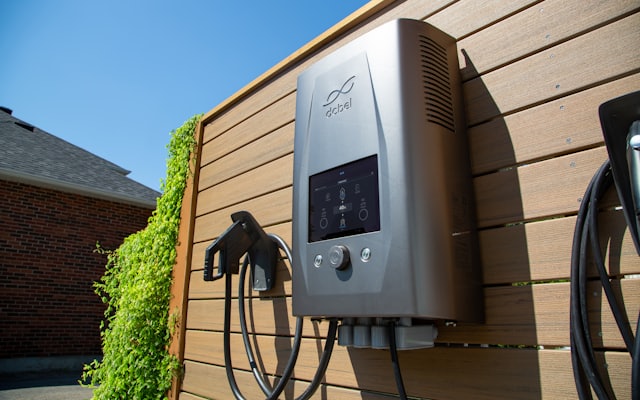
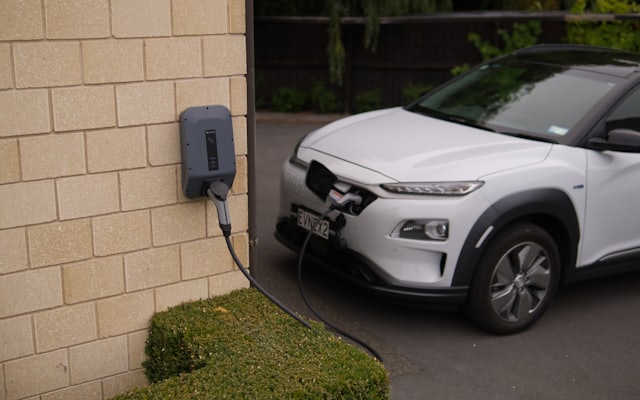
Your solar system generates AC power (after the inverter), and your EV charger feeds that into your car's onboard charger. The speed of charging depends entirely on the charging equipment you use at home.
Level 1 — Standard 120V Outlet
- Speed: 4–6 miles of range per hour
- Full charge time: 40–80 hours (impractical for daily full charges)
- Installation cost: $0 (uses existing outlet)
- Good for: Short-commute drivers who park 12+ hours daily, plug-in hybrids
- Bad for: Most EV drivers, especially trucks and SUVs
Level 2 — Dedicated 240V Circuit
- Speed: 25–35 miles of range per hour
- Full charge time: 6–12 hours (overnight)
- Installation cost: $800–1,500 (electrician + charger hardware)
- Good for: All EV drivers, especially overnight solar charging strategies
- Recommended charger wattage: 7.2–11.5 kW (32–48 amp)
DC Fast Charging (Level 3) is not available for home installation — it requires commercial-grade equipment costing $50,000+ and is only found at public charging stations.
Smart Charging: Maximizing Solar Self-Consumption
The biggest opportunity for solar + EV owners is aligning charging time with solar production. Your panels peak between 10am and 3pm. If your car is home during those hours, you can charge directly from solar power, avoiding grid electricity entirely.
Smart Charger Options in 2026
- ChargePoint Home Flex: $699 + installation. Integrates with home energy management systems. Adjustable amperage (16–50A), scheduling app, can charge at solar peak times. Works with most EV brands.
- Emporia Smart EV Charger: $399 + installation. Best value smart charger in 2026. Integrates with Emporia's home energy monitor to automatically increase charging when excess solar is detected. Level 2, 48A, works with all J1772 vehicles.
- Tesla Wall Connector (Gen 3): $475 + installation. Optimized for Tesla vehicles but works with other EVs via adapter. Integrates natively with Powerwall for solar-priority charging when battery is full.
Solar-Priority Charging Setup: If you have a Tesla Powerwall (or similar), configure it to fill your battery first during solar peak, then use remaining solar for EV charging, then draw from the battery for EV charging in the evening. This effectively runs your car 100% on solar even if you charge at 8pm.
Vehicle-to-Home (V2H): Your EV as a House Battery
Several 2026 EVs support bidirectional charging — they can push electricity from their large batteries back into your home. This is called Vehicle-to-Home (V2H) or Vehicle-to-Grid (V2G) technology.
Ford F-150 Lightning + Intelligent Backup Power
The F-150 Lightning's 131 kWh battery (extended range) can power an average home (30 kWh/day) for 4+ days during an outage. Ford's Charge Station Pro ($1,310 installed) enables V2H. The truck acts as a giant battery that also happens to drive you to work.
VW ID.4 (with bidirectional charging)
The 2025+ ID.4 supports V2H in select markets. The 82 kWh battery can supply approximately 2–3 days of whole-home backup power. VW's bidirectional charging ecosystem requires a compatible home charger unit (~$2,500).
V2H effectively gives you battery backup without buying a dedicated home battery. If you were planning to buy a $12,500 Tesla Powerwall anyway, the incremental cost of a V2H-capable EV vs. a non-V2H model may be well worth comparing.
The Full Financial Picture: Solar + EV Combined Savings
Here's where the economics get compelling. Consider a homeowner who switches to an EV and adds solar simultaneously:
Previous annual gasoline spend (15,000 mi at $3.80/gal, 28mpg)$2,036/yr
New annual electricity for EV (at grid rate 20¢/kWh)-$600/yr
Fuel savings from EV$1,436/yr
Annual home electricity bill (before solar)$2,100/yr
Solar system sized for home + EV11 kW system
Annual solar electricity savings (home + EV)$2,600/yr
Total annual savings (fuel + electricity)$4,036/yr
Over 25 years, that's over $100,000 in fuel and electricity savings (accounting for rate escalation). The combined ROI of solar + EV is substantially better than either investment in isolation, because the solar system is sized to cover both needs and the EV fuel savings are enormous.
Key Advice: Size Your Solar System for the EV From Day One
The most common mistake solar + EV customers make is installing a solar system sized for their current home electricity use, then buying an EV 2 years later and realizing the system is undersized. Adding panels later costs $800–1,200 more per kW than getting the right size from the start (additional site visit, permit, connection costs).
If you're planning to buy an EV within 3 years, add 2–4 kW to your solar quote from the beginning. The incremental panel cost is approximately $600–800/kW (equipment only), making it far cheaper than adding later.
Frequently Asked Questions
How many solar panels does it take to charge a Tesla Model 3?
A Tesla Model 3 driven 12,000 miles/year uses approximately 3,000 kWh annually for charging. At 1,500 peak production hours per year, a 430W panel produces about 645 kWh/yr. You need roughly 5 additional 430W panels (2.15 kW extra capacity) beyond what covers your home electricity use to cover all Model 3 charging from solar. In sunnier states (AZ, CA, TX), 4 panels may suffice; in northern states, you may need 6.
Can I charge my EV for free with solar panels?
Effectively yes, after the solar system pays for itself (typically 8–12 years). If you size your solar system to include EV charging, you'll generate the electricity your car needs from the sun. In states with full retail net metering, you can even charge at night using grid credits earned during the day — making EV operation essentially free once the solar system is paid off. Combined with elimination of gasoline costs, this is one of the most compelling financial cases for residential solar.
What is a smart EV charger and do I need one?
A smart EV charger (like ChargePoint Home Flex, $699, or Emporia Smart EV Charger, $399) connects to your home's WiFi and can be programmed to charge during specific times — like solar peak hours (10am–3pm) or off-peak utility rates. Smart chargers maximize self-consumption of solar power and can reduce charging costs by 30–50% compared to unmanaged charging. If you have solar, a smart charger is well worth the additional $200–400 investment.
What is vehicle-to-home (V2H) charging?
Vehicle-to-home (V2H) technology allows a compatible EV to export electricity from its battery back to your home during a power outage or peak demand periods. The Ford F-150 Lightning (131 kWh battery) can power an average home for 4+ days using its Intelligent Backup Power system. V2H can replace or supplement a dedicated home battery like a Powerwall, potentially saving $10,000+ if you were going to buy both an EV and a home battery separately.