Not all solar panels are created equal. The difference between a budget panel and a premium panel can mean 15–25% more or less electricity produced over 25 years — which directly affects your payback period and lifetime savings. Choosing the right brand for your home depends on your roof space, budget, and how long you plan to stay.
We evaluated the top solar panel manufacturers available in the US market in 2026, comparing real-world efficiency data, warranty terms, degradation rates, and cost per watt. Here's what you need to know.
Solar Panel Technology Explained First
Before comparing brands, understand the three main panel technologies still on the market:
Monocrystalline
Efficiency: 19–23%
Made from a single silicon crystal. Highest efficiency, best low-light performance, sleek black appearance. Standard choice for residential installs in 2026. Slightly more expensive to manufacture.
Polycrystalline
Efficiency: 15–17%
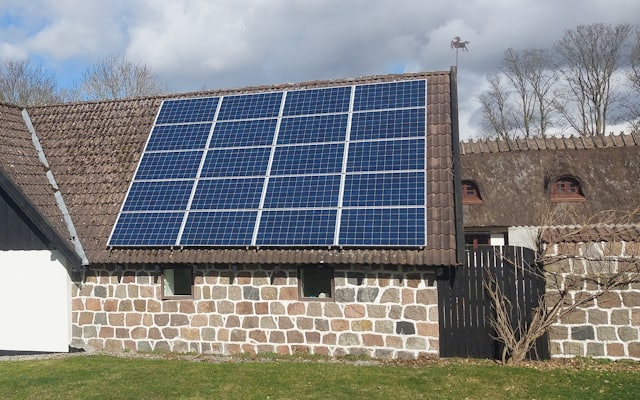
Made from multiple silicon fragments. Blue speckled appearance. Lower efficiency means you need more panels for the same output. Largely phased out of residential use — mostly found in large commercial/utility projects.
Thin-Film
Efficiency: 10–13%
Flexible panels applied to various surfaces. Best for curved roofs or building-integrated applications. Much lower efficiency means far more surface area needed. Not recommended for typical residential rooftops.
In 2026, monocrystalline is the clear winner for homeowners. Nearly every installer will propose monocrystalline panels — the comparison that matters is which monocrystalline brand and model.
Top 6 Solar Panel Brands for US Homeowners in 2026
1. SunPower (Maxeon Series) — Best Overall
SunPower's Maxeon panels have held the top spot for residential solar for years — and for good reason. The Maxeon cell architecture eliminates front-side metal contacts (which typically cause cracking and corrosion over time), replacing them with a copper foundation on the back. This produces better efficiency, dramatically lower degradation rates, and exceptional longevity.
Key advantages:
- Industry-highest 22.8% efficiency on the Maxeon 7 series
- Only panel brand offering a 40-year comprehensive warranty (covers product, performance, and service)
- Degradation rate of only 0.25% per year — after 25 years, panels still produce at 92.5% of original output. Most panels degrade at 0.5–0.7%/yr (producing 80–83% after 25 years)
- Best-in-class performance in high temperatures and low light
Drawbacks: The most expensive panel on the market by a meaningful margin. SunPower only installs through its own network, limiting installer competition. Works best for homes with smaller roofs where high efficiency per panel is critical.
2. LG Solar (NeON Series) — Premium Choice with Caveats
LG's NeON R and NeON H panels were among the best in the world — reaching 22.1% efficiency with a 25-year product warranty. They remain in the market through dealer inventory. If an installer proposes LG panels at a discount, the panels themselves are excellent; just confirm that warranty claims will be honored in your region before signing.
3. Panasonic (EverVolt HK Black) — Best for Hot Climates
Panasonic's HIT (Heterojunction with Intrinsic Thin-Layer) technology sandwiches a thin amorphous silicon layer between two monocrystalline layers. This architecture significantly reduces temperature-related power loss — a critical advantage in hot states like Arizona, Texas, and Florida where summer temperatures regularly exceed 90°F.
Standard solar panels lose about 0.3–0.4% of output for every degree Celsius above 25°C. Panasonic HIT panels have a temperature coefficient of just -0.258%/°C, compared to -0.35% to -0.45% for conventional mono panels. In Phoenix, that difference in thermal performance can mean 5–8% more annual production compared to a similarly-rated conventional panel.
Best for: Hot climates (Southwest, Southeast), homeowners wanting near-premium performance without the SunPower price premium.
4. Qcells (Q.PEAK DUO BLK) — Best Value
Qcells is a South Korean company (owned by Hanwha) that manufactures panels in both South Korea and Georgia, USA — the Georgia manufacturing qualifies their panels for domestic content bonus credits under some programs. Qcells punches well above its price point with German-engineered PERC cell technology.
The Q.PEAK DUO BLK ML-G10+ series is one of the best-selling panels in America for good reason: strong efficiency, reliable production data, and all-black aesthetics at a price $0.40–$0.80/W less than SunPower. Qcells panels degrade slightly faster than SunPower or Panasonic but still hold 86% power output after 25 years per warranty terms.
Best for: Budget-conscious homeowners with ample roof space, anyone prioritizing faster payback period over absolute lifetime production.
5. REC Group (Alpha Pure-R) — Best for Space-Constrained Roofs
REC Group is a Norwegian company with a strong US presence. Their Alpha Pure-R series uses heterojunction cell technology similar to Panasonic HIT but in an all-black aesthetic with impressive efficiency numbers. The Alpha Pure-R 430W panel produces roughly the same output as the Maxeon 6 but at a slightly lower price point.
REC panels also carry a 25-year all-inclusive "ProTrust Warranty" that covers the product, performance, and installation labor — rare in the industry. Degradation of just 0.25%/yr (matching SunPower) means panels retain 93.8% output after 25 years.
Best for: Homeowners who want near-SunPower performance without fully paying the SunPower premium. Excellent for northeast states with limited sun where panel efficiency matters most.
6. Canadian Solar (HiHero / BiHiKu Series) — Best Budget Pick
Canadian Solar is one of the world's largest solar manufacturers (ironically headquartered in Ontario, Canada with major Chinese manufacturing). Their panels appear in a huge proportion of US residential installations due to their combination of acceptable efficiency, solid warranty, and competitive pricing.
The HiHero series brings heterojunction technology to a budget price — reaching 20.5% efficiency with strong low-light performance. For homes with plenty of south-facing roof space and a primary goal of maximizing financial returns, Canadian Solar often produces the best pure ROI.
Best for: Maximizing financial return, budget-conscious installs, large roofs where efficiency per panel isn't critical, homeowners prioritizing faster payback over absolute quality.
Full Comparison Table
| Brand / Model | Efficiency | Warranty | Degradation/yr | Cost/W (installed) | Best For |
|---|---|---|---|---|---|
| SunPower Maxeon 7 | 22.8% | 40 years | 0.25% | $3.50–$4.00 | Small roofs, max output |
| LG NeON H | 22.1% | 25 years* | 0.30% | $3.10–$3.50* | Premium quality (verify support) |
| Panasonic EverVolt HK | 21.7% | 25 years | 0.26% | $3.10–$3.60 | Hot climates |
| REC Alpha Pure-R | 22.3% | 25 years | 0.25% | $3.20–$3.60 | Space-constrained, NE states |
| Qcells Q.PEAK DUO BLK | 21.4% | 25 years | 0.54% | $2.60–$3.00 | Best value, Georgia-made |
| Canadian Solar HiHero | 20.5% | 25 years | 0.55% | $2.40–$2.80 | Budget pick, large roofs |
*LG: check current warranty support availability in your region
How to Choose the Right Panel for Your Home
Choose Premium (SunPower/REC) If:
- Your roof is small or has limited south-facing space
- You live in a hot climate and want maximum thermal performance
- You plan to stay in the home 15+ years and want maximum lifetime production
- Aesthetics matter (all-black panels with no visible grid)
Choose Value (Qcells/Canadian Solar) If:
- You have ample roof space with no shading issues
- Your primary goal is shortest payback period
- You're in a state with low electricity rates where ROI is already marginal
- You may sell the home in the next 5–10 years
Inverters: String vs Microinverter vs Power Optimisers
Option 1: String Inverters — The Original and Cheapest
A string inverter connects all your panels into one or two "strings" (series circuits) and converts the combined DC power to AC at a single central unit — usually mounted on a garage wall or near your electrical panel.
String Inverter Pros
- Lowest cost: $1,000–$1,800 for a 7 kW system inverter
- Simplest design — fewer components means fewer failure points on the roof
- Easy to access and replace (inverter is on the ground, not on the roof)
- Most efficient conversion (97–98%) on ideal, unshaded south-facing roofs
- Lower installation labor cost
String Inverter Cons
- Single point of failure — if the inverter fails, the entire system stops
- "Christmas light effect": one underperforming panel drags down entire string
- No panel-level monitoring — you see total system output only
- Can't accommodate panels facing different directions without multiple strings
- Must be replaced after 10–15 years ($1,500–$2,500 replacement cost)
Top String Inverter Brands
- SMA: German engineering, excellent reliability, good monitoring. ~$1,200–$1,600 for 7 kW.
- Fronius: Austrian brand with strong US support, excellent efficiency. ~$1,400–$1,800.
- ABB / FIMER: Competitive pricing, reliable. ~$1,000–$1,400.
Option 2: Microinverters (Enphase) — Best for Complex Roofs
Microinverters mount directly on the back of each solar panel and convert that panel's DC power to AC independently. Each panel operates completely separately from every other panel.
Microinverter Pros
- Panel-level independence — shade, debris, or failure on one panel has zero effect on others
- Panel-level monitoring (see exactly how each individual panel is performing)
- Can mix panels facing different directions (N/S/E/W) in one system
- No single point of failure for the whole system
- 25-year warranty matches panel lifespan
- Enphase IQ8 can operate off-grid briefly during daytime outages (no battery needed)
Microinverter Cons
- Highest cost: ~$200/panel installed (~$3,400 for a 17-panel system)
- More components on the roof = more potential failure points (though each is individually small)
- If a microinverter fails, it's on the roof and requires climbing to replace
- Slightly lower peak efficiency (96–97%) vs string inverter on ideal roofs
- Higher installation labor cost
Enphase IQ8 Series — 2026 Standard
The Enphase IQ8 is the current generation microinverter and a significant upgrade over the IQ7. Key features:
- Grid-forming capability: The IQ8 can form a "microgrid" and power select loads during a grid outage even without a battery — as long as the sun is shining. This is unique to Enphase.
- Clipping-free design: The IQ8+ handles up to 480W AC output, preventing production losses with larger modern panels.
- Rapid Shutdown compliant: Meets NEC 2017/2020 rapid shutdown requirements without additional equipment in most states.
- Enlighten app: Panel-level monitoring showing real-time and historical production per panel.
Option 3: Power Optimizers (SolarEdge) — The Middle Ground
Power optimizers are a hybrid approach: each panel gets a small optimizer device (mounted on the panel) that maximizes that panel's DC output independently. The optimized DC power then feeds into a single central SolarEdge inverter for AC conversion.
Power Optimizer Pros
- Panel-level optimization and monitoring (like microinverters)
- Lower cost than full microinverters: ~$150/panel optimizer + $1,500 central inverter
- Central inverter is ground-mounted and easy to replace
- Better shading handling than string-only (not as good as microinverters)
- HD-Wave inverter is extremely efficient: 99% peak efficiency
- 25-year warranty on optimizers; 12-year on inverter (extendable to 25)
Power Optimizer Cons
- Still has single point of failure (central inverter)
- More complex system than pure string inverter
- SolarEdge is a proprietary ecosystem — you're locked to their inverter
- Inverter replacement at 12–15 years adds cost (plan for ~$2,000)
- Slightly higher complexity for installer
SolarEdge HD-Wave — 2026 Standard
SolarEdge's HD-Wave inverter achieves 99% peak CEC efficiency — the highest of any inverter type. For an unshaded system, this translates to slightly more production than Enphase microinverters (which hit 97% peak). The monitoring portal provides panel-by-panel data via the S440/S500B optimizers.
Cost Comparison for a Typical 7 kW / 17-Panel System
| Inverter Type | Equipment Cost | Total Installed (approx) | 25-Year Replacement Cost |
|---|---|---|---|
| String Inverter (SMA/Fronius) | $1,200–$1,800 | $1,200–$1,800 | $1,500–$2,500 (replacement at yr 12–15) |
| SolarEdge Power Optimizers + Inverter | $2,550–$4,050 | $3,000–$4,500 | $2,000 inverter replacement (extendable warranty available) |
| Enphase IQ8 Microinverters | $3,400 | $3,800–$4,800 | Individual unit replacements only (25-yr warranty) |
Decision Tree: Which Inverter Should You Choose?
Even partial shade from a chimney, tree, or vent? → Go microinverter (Enphase) or power optimizer (SolarEdge). String inverters will lose you significant production.
No shade at all? → Continue to Question 2.
Multiple roof faces (e.g., south and east)? → Go microinverter or power optimizer. String inverters with mixed orientations require multiple strings and undersized performance.
All south-facing (or close)? → Continue to Question 3.
Want to minimize upfront cost? → Go string inverter (SMA or Fronius). Budget the $1,500–$2,000 for a replacement inverter in year 12–15.
Want 25-year warranty and panel-level monitoring without the hassle? → SolarEdge is the best value upgrade.
Want the maximum reliability and grid-forming backup capability? → Enphase IQ8.